A cofactor is a non-protein chemical compound or metallic ion that is required for an enzyme 's role as a catalyst. Cofactors can be considered "helper molecules" that assist in biochemical transformations.
cofactor, a nonprotein component that is essential for the biological activity of an enzyme. Enzymes serve as catalysts in biochemical reactions, and many enzymes require cofactors to function properly.
A cofactor is a non-protein chemical that assists with a biological chemical reaction. Co-factors may be metal ions, organic compounds, or other chemicals that have helpful properties not usually found in amino acids.
Other enzymes contain a nonprotein component called a cofactor that is necessary for the enzyme’s proper functioning. This cofactor is usually weakly bonded to the polypeptide chains through intermolecular interactions.
A cofactor is a molecule that is a part of the active site of an enzyme and is regenerated with each turnover of substrate. It can be dissociated from the enzyme and an example of a cofactor is pyridoxal phosphate, which is involved in various group-transferring enzymes.
The cofactor acts as an intermediary, ensuring that electrons are efficiently transferred between molecules, thus driving the reactions forward. The presence of cofactors can also influence enzyme kinetics.
Master Cofactor with free video lessons, step-by-step explanations, practice problems, examples, and FAQs. Learn from expert tutors and get exam-ready!
The meaning of COFACTOR is the signed minor of an element of a square matrix or of a determinant with the sign positive if the sum of the column number and row number of the element is even and with the sign negative if it is odd.
A cofactor is a non-protein molecule that helps in biochemical reactions. These can be metal ions, organic substances, or other molecules with beneficial characteristics not found in amino acids.
Understanding Cofactor Categories and Functions: Define and differentiate between metal cofactors and coenzymes, including the concept of prosthetic groups versus loosely bound coenzymes.
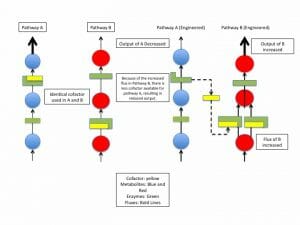 A cofactor is a non-protein chemical that assists with a biological chemical reaction. Co-factors may be metal ions, organic compounds, or other chemicals that have helpful properties not usually found in amino acids.